
Flexlore Articles

Onboarding Is an Operations Decision
Most organizations still file onboarding under HR. The research from Gallup, Harvard Business Review, and Deloitte files it under performance. That gap is not semantic. It determines whether your program is measured by forms completed or by whether a new hire can run standard work safely and consistently on the floor.
When onboarding sits outside operations, the metrics that matter to supervisors never enter program design. Ramp time, error rate, shift coverage, and customer impact stay invisible until turnover shows up in a quarterly report. Treating onboarding as an onboarding operations decision moves the conversation from compliance to contribution.

Cover slide (Post 4.1): Gallup; Harvard Business Review; Deloitte workforce research
Why Does HR Ownership Miss the Floor?
HR ownership works for policy, benefits, and compliance. It rarely owns the sequence that turns a hire into a productive operator. On the floor, onboarding is a handoff problem: who trains which task, on what timeline, with what proof that the new hire understood it.
When the program ends at orientation, operations inherits an employee who is legally onboarded but operationally unprepared. Supervisors fill the gap with verbal instruction during live production. That produces variance between shifts, rework, and early disengagement. Deloitte and The Manufacturing Institute have repeatedly flagged workforce attraction and retention as a top operational challenge in manufacturing. The fix is not a better welcome packet. It is a program owned where the work happens.
What Does Structured Onboarding Change in Numbers?
Harvard Business Review research published in 2022 documents that structured onboarding lifts new-hire productivity by 62%. The same body of research reports that companies running a formal program see 50% greater new-hire retention than those without one.
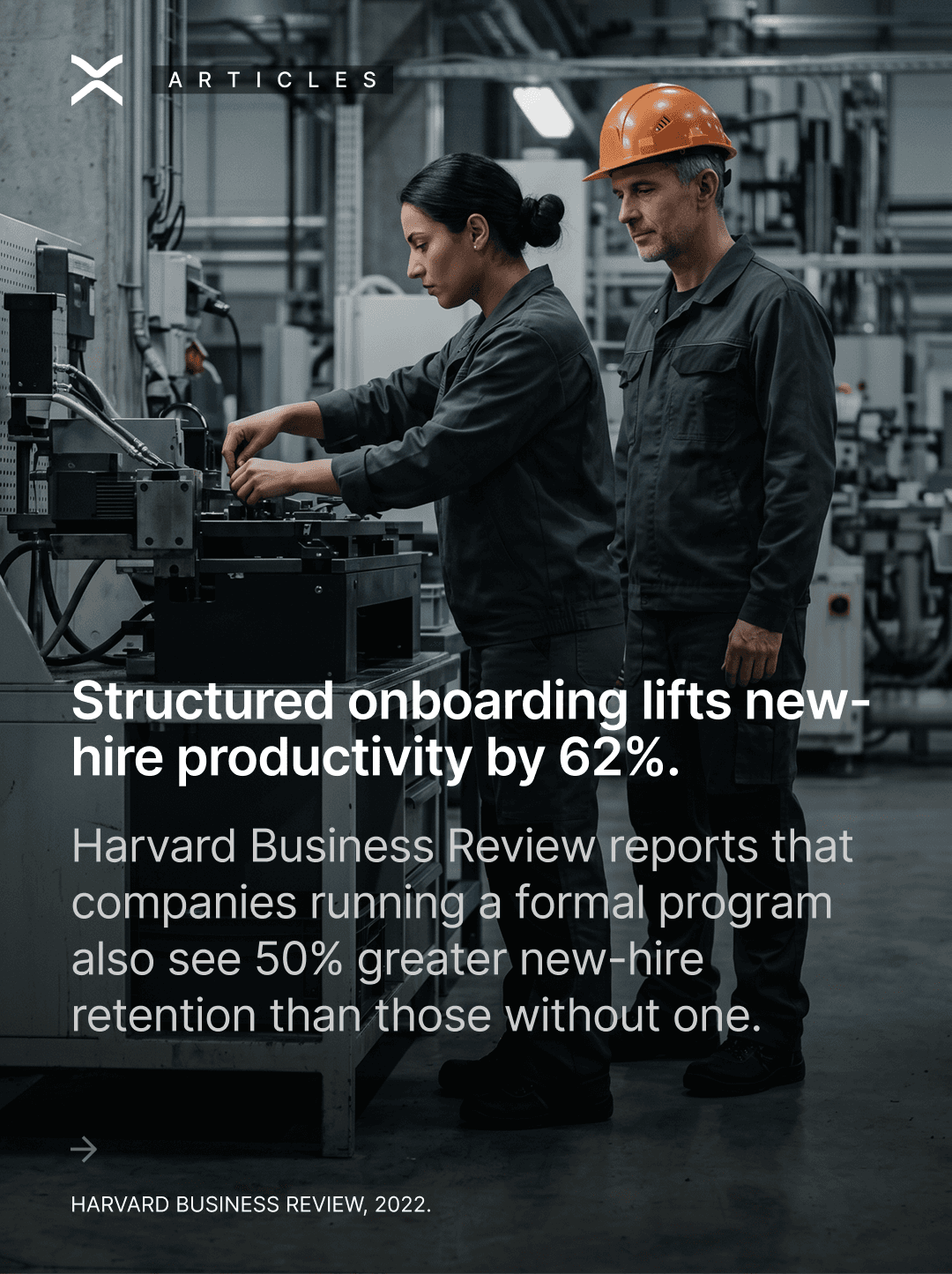
Post 4.2 — 62% productivity lift; 50% greater retention
Stat slide (Post 4.2): Harvard Business Review, 2022
Those figures are operational, not ceremonial. Productivity in the first quarter is the difference between a hire who covers their shift and a hire who slows the line. Retention in the first year is the difference between one training cycle and repeating recruiting, onboarding, and ramp for the same role. A formal program is not a slide deck on day one. It is a defined sequence with named owners, standard work references, and checkpoints that run into the first 90 days.
Organizations that keep onboarding informal often confuse activity with structure. A tour, a badge, and a buddy assignment are not a program. Structure means the new hire knows which tasks to learn in which order, who signs off on competency, and what good performance looks like at day 30.
Where Does Manager Involvement Fit?
Manager involvement is the missing lever in most programs. Gallup finds that when a manager actively participates in onboarding, new hires are 3.4 times more likely to call the experience successful. Active participation is not a welcome lunch. It is reviewing standard work together, observing performance, and giving same-day feedback while the new hire is still forming habits.
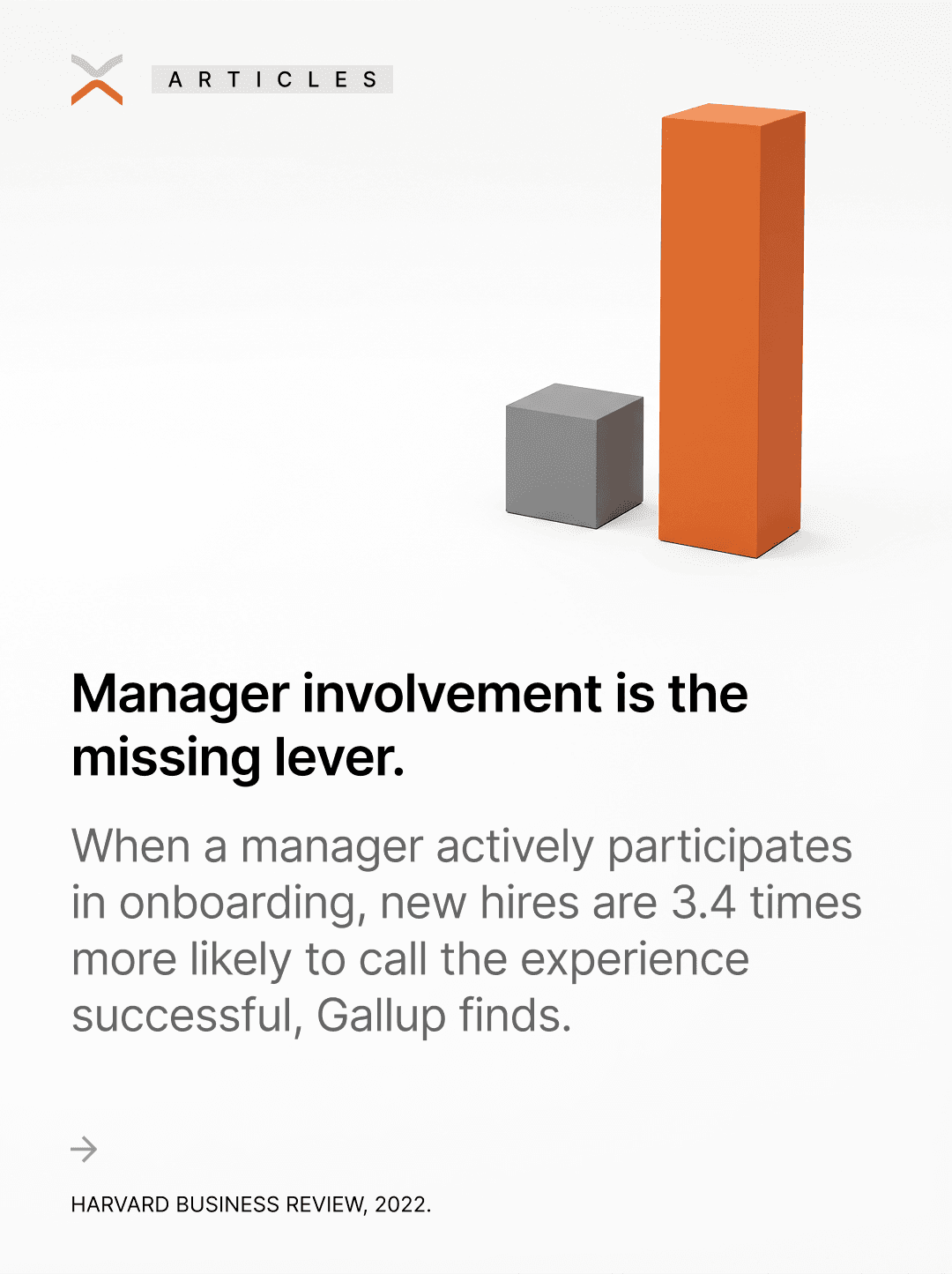
Post 4.3 — 3.4X manager involvement multiplier
Stat slide (Post 4.3): Gallup, Why the Onboarding Experience Is Key for Retention
Operations leaders already know managers set the tone for safety, quality, and pace. What changes when onboarding is an operations decision is that manager time is scheduled, not hoped for. The supervisor is not asked to train "when there is a minute." They are given a short list of critical tasks, a reference library, and protected check-ins in the first month. That is how the 3.4 multiplier becomes repeatable instead of dependent on one strong supervisor.
Why Does Exceptional Onboarding Show Up in Satisfaction?
Gallup links exceptional onboarding to downstream engagement. Employees who experience it are 2.6 times more likely to be extremely satisfied with their organization. Satisfaction is not a soft metric on a frontline operation. It correlates with attendance, willingness to cover peak demand, and retention through the first busy season.
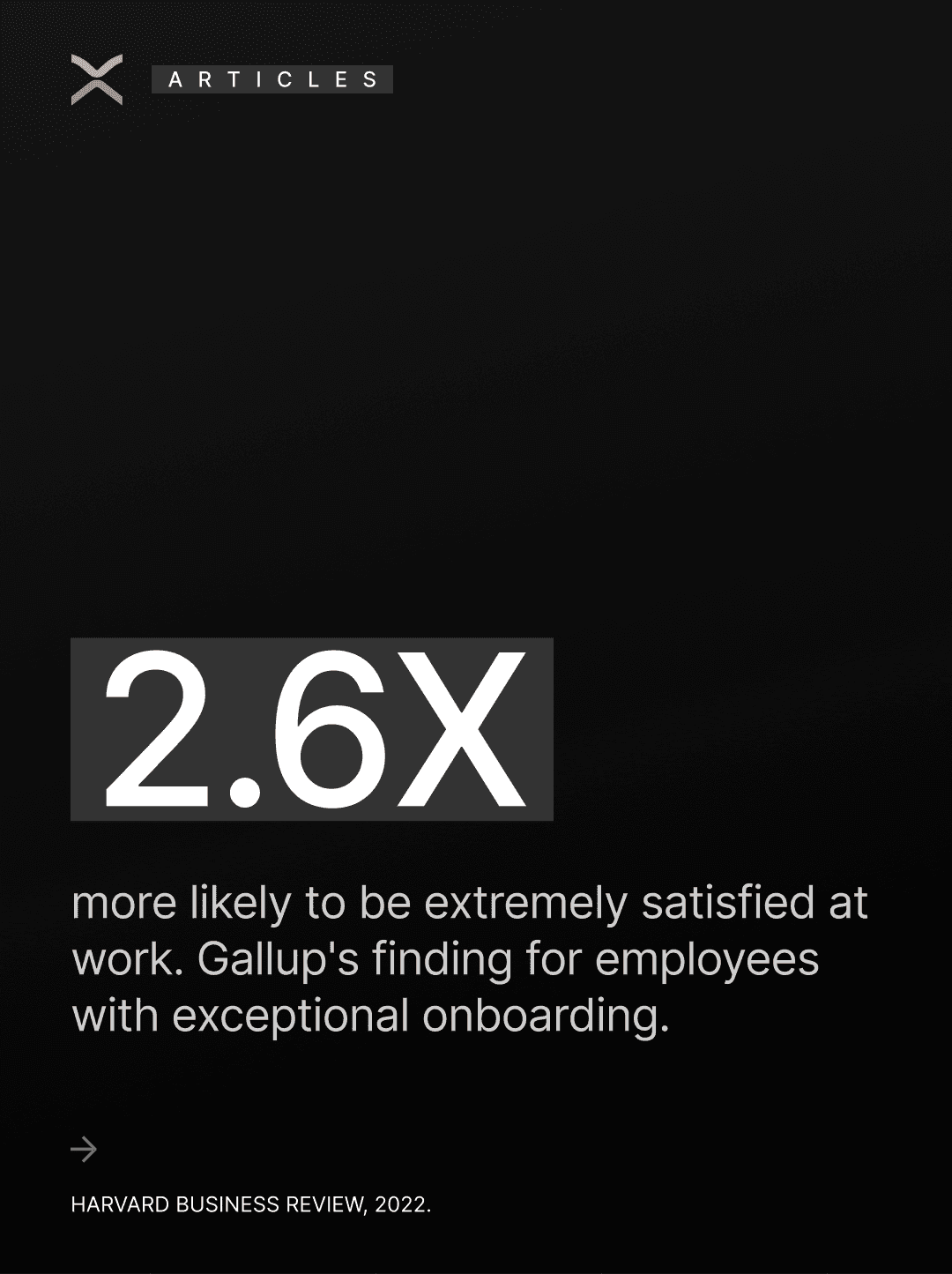
Stat slide (Post 4.4): Gallup, Why the Onboarding Experience Is Key for Retention
Extreme satisfaction follows clarity. New hires who know the standard, trust their supervisor, and see a path to competence do not spend their first weeks guessing whether they belong. They spend them learning. When only a fraction of employees strongly agree their organization delivers great onboarding, the satisfaction gap is predictable. Closing it is an operations design problem.
What Does Operations-Led Onboarding Look Like?
An operations-led program has four visible traits:
A single source of truth for standard work, accessible on the floor, not trapped in PDFs or veteran memory
A 90-day arc with handoffs between orientation, role training, and independent performance
Manager checkpoints at days 7, 30, 60, and 90 with a short readiness checklist
Metrics tied to production such as time-to-first-independent shift, early error rate, and 90-day retention by location
HR remains a partner for compliance and employee experience. Operations owns the sequence that produces performance. Training content may sit in a central library, but supervisors own verification. That division matches how work actually runs.
How Should Leaders Move Ownership to Operations?
Start with one high-turnover role. Map the first 90 days as a process chart: inputs, owners, outputs, and failure points. Most gaps appear between day 1 and day 14, when orientation ends and the floor takes over without a defined plan.
Next, align metrics. If the plant reviews OEE, scrap, or service times weekly, add ramp and 90-day retention to the same review. When HBR documents a 62% productivity lift from structured onboarding, the conversation belongs in the operations meeting, not only in the HR newsletter.
Then equip managers. Give them recorded standard work, quick checks for understanding, and a view of who is trained on what. Remove the need to invent training under production pressure. The goal is to make good onboarding the default path, not a heroic exception.
What Should You Measure After the Handoff?
Useful leading indicators include:
Days to first independent shift with documented sign-off
Early-task error or rework rate compared to tenured workers in the same role
90-day retention by site and supervisor
New hire readiness score from a manager checklist at 30 and 60 days
Training completion with verification, not completion alone
When Gallup reports that manager involvement multiplies success by 3.4, your dashboard should show which supervisors had scheduled involvement and which cohorts succeeded. That turns onboarding from a sentiment survey into an operating diagnosis.
Closing the Ownership Gap
Onboarding is an operations decision because the cost and the payoff both live on the floor. Structured programs lift productivity and retention. Manager involvement and exceptional design multiply engagement. The organizations that win treat onboarding like any other critical process: owned, measured, and improved. The ones that struggle keep it as paperwork owned by a function that does not run the shift.
Sources
Harvard Business Review, structured onboarding and new-hire performance research, 2022
Gallup, "Why the Onboarding Experience Is Key for Retention"
Gallup, manager involvement and onboarding success research
Deloitte and The Manufacturing Institute, workforce and manufacturing outlook research